

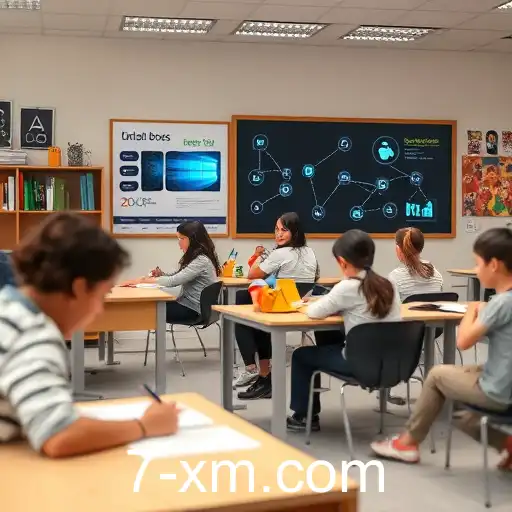

The realm of education is undergoing a significant transformation propelled by technological innovations, most notably by the influence of artificial intelligence (AI). As we delve deeper into 2025, AI's footprint in education is more pronounced than ever, from personalized learning experiences to administrative efficiencies.
The incorporation of AI in educational settings has sparked both optimism and controversy. On one hand, AI systems enable personalized learning experiences, catering to individual student needs and pacing. This methodology shifts away from the traditional one-size-fits-all approach, granting students the freedom to learn at a pace that suits their capabilities. Teachers are increasingly utilizing AI tools to identify learning gaps and craft tailored educational experiences, ensuring no student is left behind.
Conversely, the integration of AI raises concerns about data privacy and the diminishing role of human educators. With AI systems collecting vast amounts of data to optimize learning processes, questions arise regarding the safeguarding of this information. Furthermore, while AI can simulate certain educational tasks, the lack of human empathy and emotional intelligence remains a notable limitation. Many argue that AI should be an augmentative tool rather than a replacement for human educators.
In classrooms across the globe, AI-driven technologies help streamline administrative tasks, allowing educators to focus more on teaching. Systems manage attendance, grade papers, and even facilitate communication between parents and schools. Such advancements reduce the bureaucratic burden on teachers, thereby enhancing educational quality through increased instructor engagement.
AI's role in education also extends beyond the traditional classroom setting. Online courses and distance learning programs are increasingly employing AI to foster interactive and engaging learning environments. These changes reflect a broader trend towards digital-first education, accommodating the diverse needs of global learners.
Nevertheless, the implementation of AI in education is not without its challenges. Ensuring equitable access to AI technologies remains a significant hurdle, particularly in under-resourced regions. There needs to be a concerted effort to bridge the digital divide to ensure all students benefit from these innovations.
In summary, while AI is set to redefine the educational landscape, it must be implemented thoughtfully to enhance, not hinder, the learning process. As we look to the future, the education sector will likely continue to evolve, navigating the balance between technological advancement and human interaction.

Exploring the influence of artificial intelligence on various aspects of daily life and its future implications.

Exploring how 7xm has shaped the online gaming industry amidst evolving technologies and consumer trends.

Exploring how the esports boom is reshaping the gaming landscape in 2025.

An analysis of the growing popularity of the gaming platform 7xm and its impact on the gaming industry.

Exploring the intersection of technology and economy as innovations reshape global dynamics.

Explore how online gaming is being redefined in 2025 with emerging technologies and platforms like 7xm.
